Best Amazon Price Trackers in 2026, and the One Job None of Them Do
Prices checked October 7, 2026
Quick answer
Most lists of the best Amazon price trackers cover the same tools: Keepa, CamelCamelCamel, Honey and a deal site or two. They are useful, but they all answer one question about one product: is this price good compared with its own past? None of them answer the question that matters most for everyday staples: which listing is actually the cheapest per unit? This guide covers what each tool is good at, as checked on October 7, 2026.
Coffee K-Cups, ranked by price per unit
 Best value
AmazonFresh 80 Ct. K-Cups, French Vanilla Flavored Medium...
$0.29/Pods
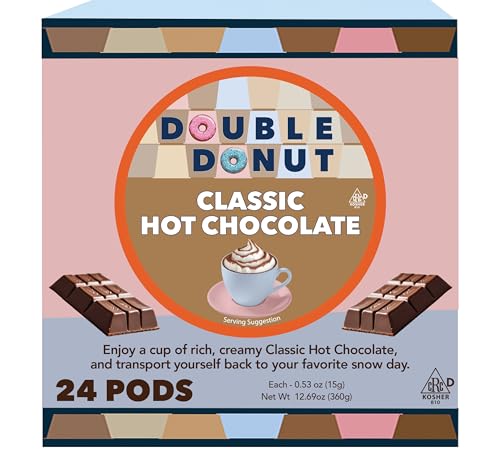
Double Donut Coffee Hot Chocolate Pods for Keurig K Cups...
$0.39/Pods

Tim Hortons Original Blend, Medium Roast Coffee,...
$0.48/Pods
Keepa
Keepa is the most detailed Amazon price history tool. It runs as a browser extension and a website, and draws a chart of a product's price over years, along with sales rank and offer data. The free tier covers charts and a limited number of tracked products. Full data and its API need a paid subscription. Keepa is the pick for sellers, researchers and anyone timing a large purchase.
CamelCamelCamel
CamelCamelCamel is the simple, free option. Look up a product, see its price history, and set an email alert for a target price. Its browser extension, The Camelizer, shows the chart on the Amazon page. It tracks one product at a time and does not compare listings with each other.
Honey
Honey is a coupon extension owned by PayPal, not a price tracker in the strict sense. It tries coupon codes at checkout and shows some price history. A widely viewed investigation reported that Honey replaced creators' affiliate links at checkout, and a class action lawsuit followed. PayPal disputes the claims. On Amazon, typed coupon codes rarely work, so Honey often finds nothing there.
Slickdeals
Slickdeals is a community deal site rather than a tracker. Members post and vote on deals across many stores. It is good for spotting sales you were not looking for. It does not calculate price per unit, and votes measure popularity rather than value.
Amazon's own price history
Amazon now shows some price history through its shopping assistant, so for a quick look you may not need an extension at all. Amazon also shows a unit price on many listings, but not all, and different listings of the same product often use different units. That makes it hard to compare a small pack with a bulk pack.
The job none of them do: price per unit across listings
Every tool above starts from a product you already picked. But for paper towels, coffee pods, detergent or batteries, the real saving usually comes from picking a different listing: a bigger pack, a different brand or a different format. A price tracker will tell you that your chosen listing is at a good price while a different listing costs much less per unit.
Dealophant is built for that job. It is a free website, with no extension and no account, that pulls live Amazon prices for every in-stock listing in a category and ranks them by price per unit. For example, the cheapest K-Cup listing per pod right now is AmazonFresh 80 Ct. K-Cups, French Vanilla Flavored Medium... at $0.29/Pods. The full ranking is on the K-Cups comparison page.
Which tool to use for which job
- To find the cheapest listing per unit in a category: Dealophant.
- To check whether an Amazon deal is a real 90-day low: Dealophant's deal check.
- To see years of price history for one product: Keepa or CamelCamelCamel.
- To get an alert when one product drops to a target price: CamelCamelCamel or Keepa.
- To find sales across many stores: Slickdeals.
- To try coupon codes at checkout: a coupon extension, with the caveats above.
How to use them together
Start with Dealophant to pick the listing that is cheapest per unit. Check that the price is near its recent low with the deal check or the lowest prices page. If you are buying something expensive and can wait, put the listing into Keepa or CamelCamelCamel and set an alert. The method behind the ranking is explained in how Dealophant calculates price per unit.
Common questions
- What is the best Amazon price tracker in 2026?
- It depends on the question. For a long price chart of one product, Keepa or CamelCamelCamel. For a quick check of whether a deal is a real low, Dealophant's deal check. For finding which listing is cheapest per unit across brands and pack sizes, Dealophant is the only one of these tools built for it.
- Is Keepa free?
- Keepa has a free tier with price charts and a limited number of tracked products. Full data such as sales rank history and its API needs a paid subscription.
- Is CamelCamelCamel still free?
- Yes. CamelCamelCamel is free, including its price-drop email alerts, and is supported by ads and affiliate links.
- Is Honey safe to use?
- Honey is owned by PayPal. A widely viewed YouTube investigation reported that Honey replaced creators' affiliate links at checkout, and a class action lawsuit followed. PayPal disputes the claims. If that concerns you, you can compare Amazon prices without any browser extension.
- Does Amazon show price history?
- Amazon now shows some price history for some products through its shopping assistant. It does not rank other listings by price per unit, so it cannot tell you that a different pack size or brand is cheaper.
- Does Amazon show price per ounce?
- On many listings, yes, but not all, and the unit is not always consistent between listings. Some show price per count while others show price per ounce, which makes side by side comparison hard. Dealophant converts every listing in a category to the same unit.
- How do I know if an Amazon deal is real?
- Compare today's price per unit with the lowest price per unit the same product has had in the last 90 days. Paste the product into Dealophant's deal check to see that comparison in one step.
- Is a bigger pack always cheaper per unit on Amazon?
- No. Larger packs are often cheaper per unit, but not always, and sale prices on smaller packs can beat them. Compare the price per unit, not the pack size.